
San Sebastián: Come Hungry, Stay Curious

Some cities impress you right away. San Sebastián does something better. It invites you to slow down, take one more turn, order one more bite, and stay just a little longer than planned
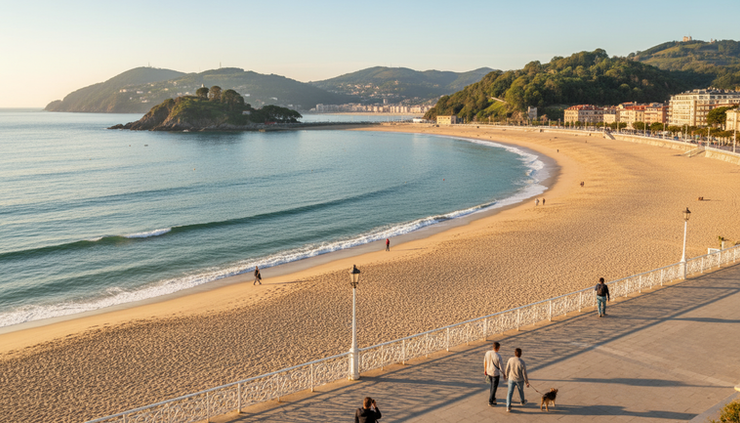
This city on Spain's northern coast feels both elegant and easygoing. It has curved beaches, green hills, Belle Époque buildings, fishermen’s bars, quiet markets, and pintxos counters that turn dinner into a delicious little treasure hunt.
Part seaside escape, part food pilgrimage, part cultural awakening. And while plenty of travelers come because they have heard San Sebastián is one of the great food cities of the world, the ones who truly fall for it are usually the ones who arrive curious.
Curious about why locals stand shoulder to shoulder at a bar instead of sitting down for a long meal. Curious about the Basque language on signs. Curious about the rhythm of the tides, the pride in local ingredients, and the feeling of an evening that begins with “just one pintxo” and somehow stretches across several tiny restaurants, several conversations, and a walk home along the bay.
San Sebastián is best enjoyed at walking speed
San Sebastián, or Donostia in Basque, is not a city that asks you to rush. That may be one of its greatest gifts.
The city sits along the Bay of Biscay, wrapped around the famous La Concha beach as if it were placed there with great care. The promenade is wide and graceful, made for morning walks, unhurried conversations, and the kind of people-watching that feels like a local sport. You may see swimmers heading into the water in every season, parents pushing strollers, older couples dressed beautifully for a stroll, and surfers walking barefoot toward Zurriola Beach with boards tucked under their arms.
La Concha is the postcard beach, and yes, it really is that lovely. But San Sebastián’s coastline has different moods. Ondarreta feels softer and more residential, while Zurriola brings a younger, surf-loving energy. If you like to build breathing room into a trip, this is where I would add it. Stay long enough to see the beach in the morning light, at midday, and again when the bay turns silver in the evening.
A simple but worthwhile plan is to start the day with coffee and a walk along the water before the city fully wakes up. You do not need much more than a light jacket, comfortable shoes, and a willingness to wander. The weather in Spain's Basque Country can change quickly, so layers are your friend. A sunny morning can become misty by lunch, then clear again just in time for sunset.
There is something freeing about a place where the best first activity costs nothing and requires no reservation.
Pintxos are not just food; they are a way into the city
Let’s talk about the reason many people first circle San Sebastián on a map: pintxos.

Pintxos are small bites, often served on bread or skewered with a toothpick, though the best examples go far beyond that simple description. Some are rustic. Some are refined. Some are hot from the kitchen and ordered from a chalkboard. Others are arranged across the bar like edible theater.
The joy is not only in eating them. It is in the movement.
You step into a bar, order a drink, choose one or two bites, savor them, and then move on to the next place. This is not the evening for claiming a table and settling in too early. It is a gentle crawl through flavor, conversation, and instinct. Locals often know exactly what each bar does best, so a little guidance can make the experience much richer.
A few things help the night flow naturally:
Order one or two pintxos at a time instead of piling your plate high.
Watch what people around you order hot from the kitchen.
Keep an eye on the chalkboard. Some of the best bites may never make it to the counter.
Embrace the stand-up style. It is part of the fun, not a lack of comfort.
Go earlier if you prefer a calmer experience, later if you enjoy more energy.
And please don't worry if you are not fluent in Spanish or Basque. A smile, a little patience, and a few polite words go a long way. Try “kaixo” for hello in Basque and “eskerrik asko” for thank you. Even if your pronunciation is not perfect, the effort matters.
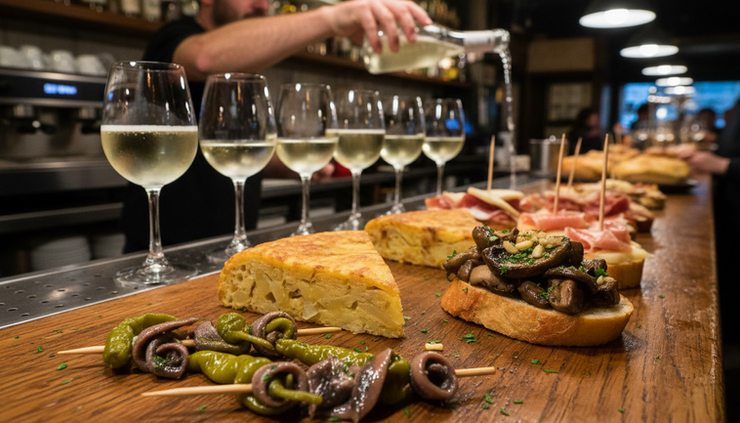
What I love most about pintxos culture is that it rewards presence. You pay attention. You notice what just came out sizzling. You listen for the bartender calling an order. You lean into the room's rhythm.
A pintxos evening in San Sebastián can feel casual, but it is never careless. There is great pride here, in the ingredients, the preparation, and the shared ritual of going out together.
The Old Town asks you to get a little lost
San Sebastián’s Old Town, the Parte Vieja, is where many travelers spend their first evening, and for good reason. The streets are narrow and full of personality. The bars are close together. The air smells like grilled seafood, warm bread, cider, and rain on stone when the weather turns.
This is the kind of neighborhood where it pays to wander without trying to “cover” everything.
You might pass the Basilica of Saint Mary of the Chorus, then find yourself on a street where every doorway seems to open into another lively pintxos bar. You might come across Plaza de la Constitución, the Old Town’s central square, once used for bullfights, with numbered balconies still hinting at that past. You might hear Basque at the next table and realize this isn't simply another pretty Spanish city. It has its own identity, language, and history.
That difference is part of what makes San Sebastián so compelling.
Basque culture is strong here, not displayed like a museum exhibit, but woven into everyday life. You see it in the language. You taste it in cider houses and markets. You feel it in the pride locals take in tradition, community, and food that honors its origins.
If you enjoy local experiences, this is where I would plan a guided pintxos walk, a market visit, or even a cooking class. Not because you cannot explore on your own. You absolutely can. But a good local guide can help you understand what you are tasting and why it matters. That changes the whole feeling of a place.

A practical note: the Old Town is popular, especially in the evening. If you like a quieter look at the neighborhood, go in the morning. You will see deliveries arriving, shopkeepers opening doors, and cafés filling slowly. It feels more personal before the dinner crowd rolls in.
Markets show the city before it dresses up for dinner
One of my favorite ways to understand a food city is to visit the market.
In San Sebastián, markets are not just places to shop. They reveal what the city values. Fresh fish, local cheese, glossy peppers, mushrooms, seasonal produce, and meats are all part of the story. Even if you are not cooking during your stay, walking through a market gives you context for what will show up later on your plate.
La Bretxa Market, near the Old Town, is a natural stop if you are already exploring. San Martín Market, closer to the city center, offers another glimpse into daily life. You do not need to rush through with a camera in hand. Take your time. Notice what is in season. Watch how locals shop. Buy fruit for later, or ask for a small wedge of cheese if it feels right.
This is where San Sebastián becomes more than a list of restaurants.
You start to see the chain of care. The fish at the market becomes that night's grilled special. The peppers become a pintxo. The local cheese becomes dessert with quince or walnuts. The food culture feels famous because it is excellent, yes, but also because it is deeply connected to place.
If you love culinary travel, I would build at least one morning around a market visit and lunch nearby. Keep it relaxed. The pleasure is in noticing, not checking off a stop.
Basque traditions add depth to every day
San Sebastián has plenty of polish, but it also has soul.
You may hear music in a square, see rowing teams on the water, or notice locals gathering for festivals, food traditions, and neighborhood events. The Basque region has a long and distinct cultural history, and San Sebastián offers many ways to experience it without forcing it.
Txakoli, the lightly sparkling Basque white wine, is a lovely place to start. People often pour it from a height, which adds a little drama and energy to the moment. Basque cider is another local tradition, especially if you venture inland to a cider house. These experiences are best when you understand the customs around them, so thoughtful planning helps.
Then there is the rhythm of dining itself. Lunch can be the main meal. Dinner may happen later than many U.S. travelers expect. Sundays and holidays can shift opening hours. Reservations matter for certain restaurants, while pintxos bars can be more spontaneous.
The trick is to plan enough, but not too much.
San Sebastián shines when you leave room between plans. Leave space for a second coffee. Leave space to return to the beach. Leave space for the bar someone recommends in passing. A balanced itinerary here might include one special restaurant reservation, one guided food experience, one day trip, and plenty of unscheduled wandering.
That balance is often what turns a good trip into one that feels personal.
Go beyond the obvious if you have more time
San Sebastián can easily fill several days, but it also makes a beautiful base for exploring the surrounding area.
If you like coastal scenery, the nearby fishing villages along the Basque coast are worth your attention. Getaria is known for seafood and its connection to fashion designer Cristóbal Balenciaga. Hondarribia has colorful houses, a historic center, and a lovely border-town feel near France. The coastline itself is dramatic, with cliffs, coves, and changing light that makes even a short drive feel memorable.
Inland, the landscape shifts to hills, farms, cider houses, and towns where Basque traditions feel close at hand. This is where a private driver or well-planned day tour can make the day smoother, especially if you want to enjoy cider or wine without worrying about logistics.
For travelers who love museums, San Sebastián also pairs well with Bilbao, home to the Guggenheim Museum Bilbao. The two cities have very different personalities, which makes them a strong combination. Bilbao feels urban and design-forward. San Sebastián feels coastal, graceful, and food-obsessed in the best possible way.
If your dream trip includes both culture and rest, this region delivers.
When to go and how to pace the trip
San Sebastián is beautiful in different seasons, but the best time depends on the kind of trip you want.
Summer brings warm beach energy and longer days. It also brings more visitors. Spring and fall are wonderful for food, walking, and a slightly slower pace. Winter is quieter and moodier, with fewer beach days but a cozy appeal if you're focused on cuisine, culture, and atmosphere.
A few small choices can shape the experience:
Stay within walking distance of the Old Town or bay if it is your first visit.
Pack shoes that can handle cobblestones and seaside walks.
Plan dinners by neighborhood so you don't crisscross the city.
Reserve special meals early, but leave casual evenings open.
Expect weather shifts and enjoy them. The mist suits the city.

The goal is not to do everything. The goal is to let San Sebastián work on you a little.
Let it turn lunch into an event. Let it make a beach walk feel necessary. Let it teach you that curiosity is one of the best travel companions you can bring.
San Sebastián is a city for travelers who like flavor, texture, and a sense of place. Come hungry, absolutely. But stay curious. Ask what is in season. Try the house specialty. Walk one more street. Learn one Basque word. Watch the tide move. Say yes to the evening as it unfolds.
And when you are ready to turn that curiosity into a trip that fits your style, click here, and we would be delighted to help create a personalized San Sebastián getaway, with the right mix of food, culture, coast, and breathing room.


Comments